
Science Tuition
Online Science tuition for Combined and Triple Science
Biology, Chemistry and Physics taught one-to-one by tutors who excelled in them — from securing a foundation pass to grades 8 and 9 in Triple Science, or A and A* at A-Level.
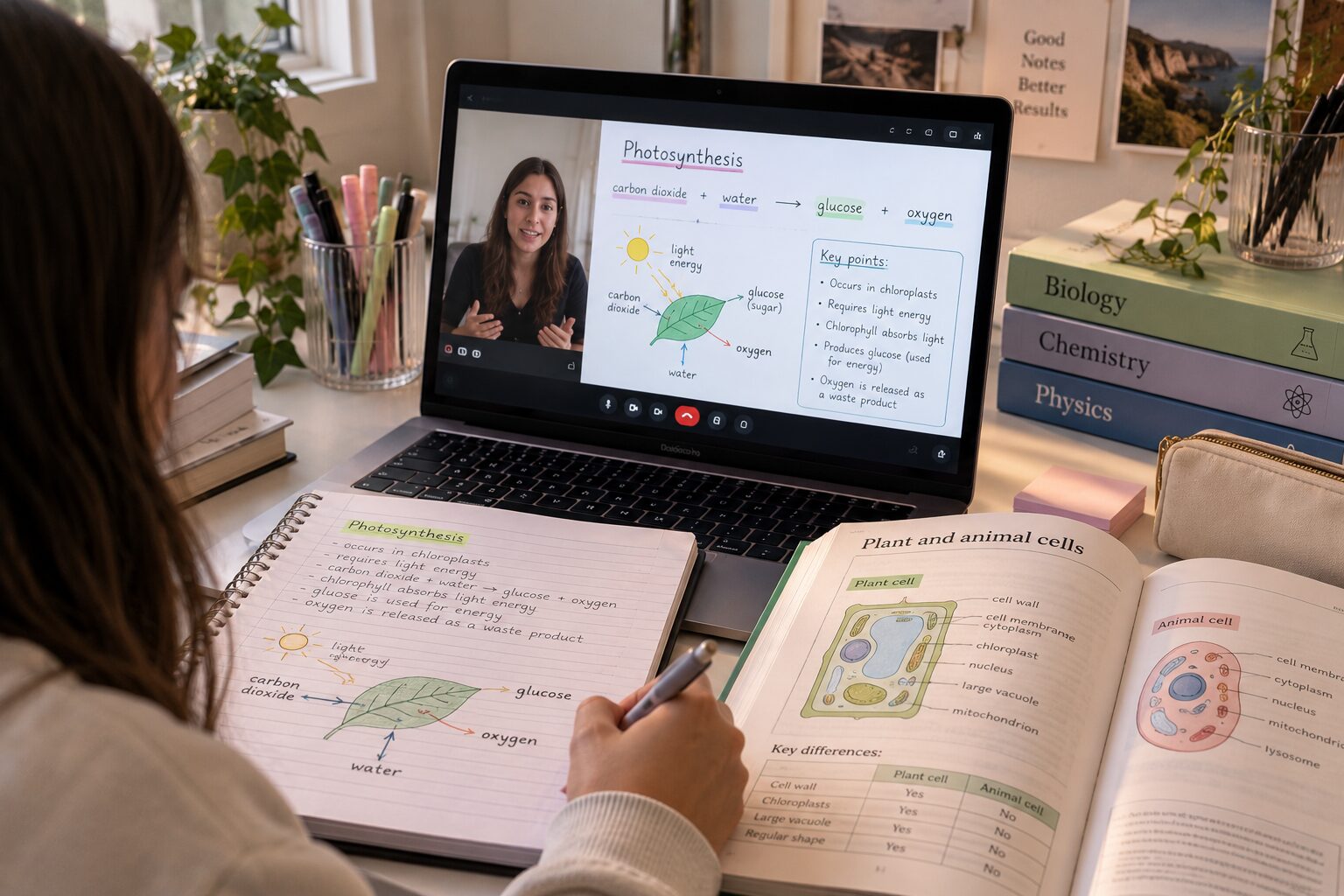
See the levels we teach below and see what each one covers.
Get ahead in Science this term
Help your child strengthen their understanding of Biology, Chemistry and Physics, tackle challenging topics and build confidence ahead of their next assessments.
Start with just one hour per week.
Levels we teach
Science at every level, Combined, Triple and A-Level
Biology, Chemistry and Physics taught one-to-one, shaped around your child's route and exam board.
KS3 & GCSE
Biology, Chemistry and Physics for Combined and Triple Science, covering what actually comes up in class and on exams.
What we cover
- Combined or Triple Science, by exam board
- Required practicals and how to write them up
- Chemistry and Physics calculations
- Longer 6-mark answers
How we teach it: Tutors explain the idea, then go straight into exam questions — especially the calculations and write-ups students find hardest.
Explore this levelA-Level
Biology, Chemistry and Physics taught in depth by tutors who hold at least an A in that subject.
What we cover
- Core topics taught in depth
- Maths skills for science
- Practical skills and data questions
- Exam technique for long answers
How we teach it: Lessons go deeper on whatever your child's class covered that week, then apply it to past-paper questions.
Explore this levelWhere we help most
Longer 6-mark answers
How to lay out longer written answers so the key scientific words earn full marks.
The maths inside science
Practice with formulas, unit conversions and graphs for Physics and Chemistry.
Combined or Triple
Lessons matched to whether your child sits Combined Science or the three separate sciences.
Ready to talk about your child's Science?
My daughter has weekly Science and Maths sessions. Her grades have improved greatly since joining Bianca and her wonderful tutors. Lessons are tailored to the student, tutors have engaged my daughter and she looks forward to her sessions each week. Her grades have increased along with her confidence.
Get in touch
Tell us where your child is struggling
Frequently asked questions